
Gopher Tortoise Permitting & Relocation
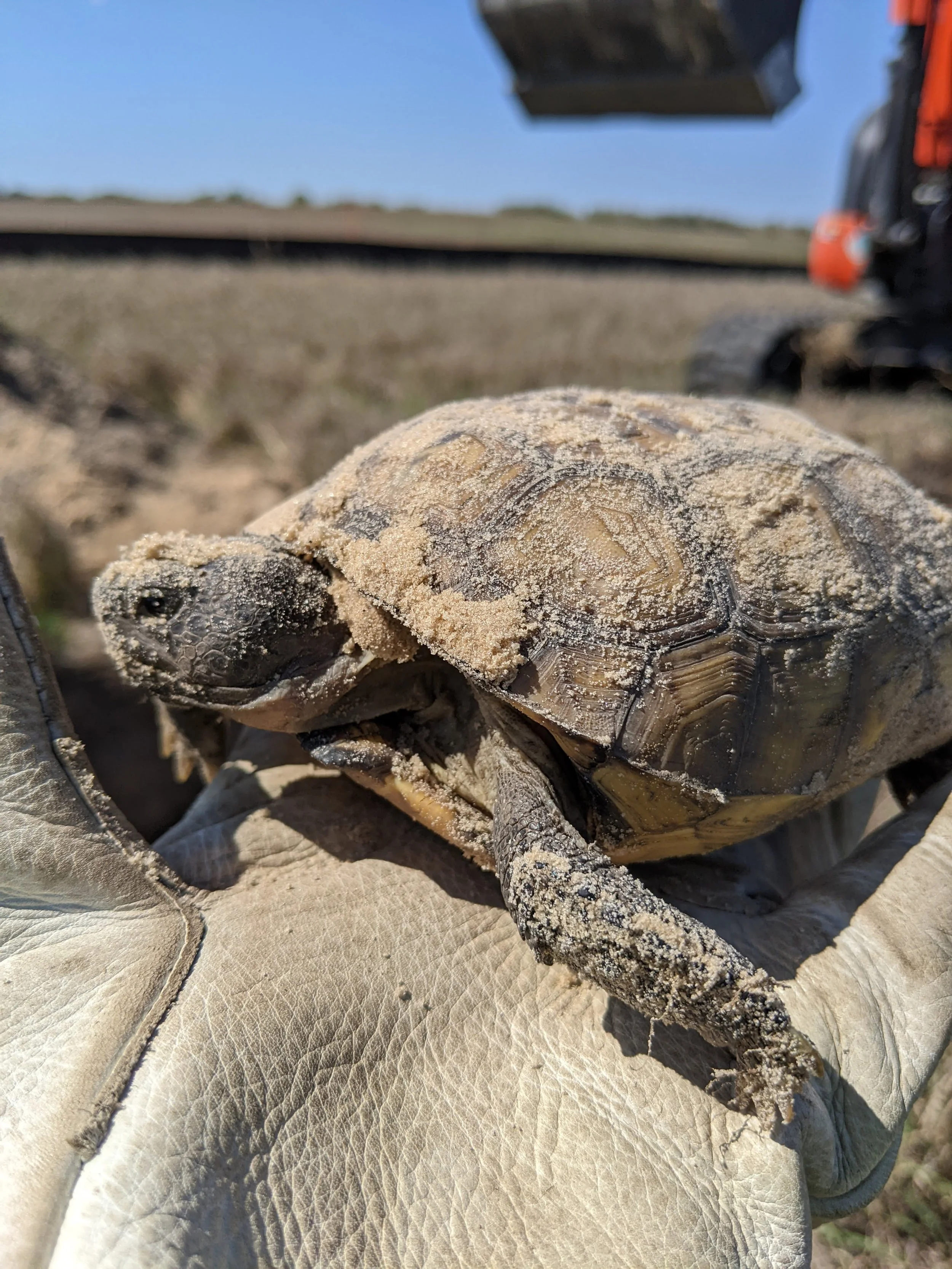
FWC permitting and relocation support for Florida projects where gopher tortoise burrows may be affected by clearing, construction, or development.
FWC Permitting and Relocation Support for Florida Projects
If gopher tortoise burrows are located within or near a proposed work area, additional steps may be required before clearing, grading, construction, or site development can proceed. In Florida, gopher tortoises and their burrows are protected by state law, and FWC states that a relocation permit must be obtained before disturbing burrows or conducting construction activities. FWC also considers work within 25 feet of a gopher tortoise burrow to be a disturbance.
Bear Environmental Consulting provides gopher tortoise permitting and relocation support for residential, commercial, agricultural, and land development projects throughout Florida. We help property owners, builders, developers, contractors, and project teams understand the permitting process, identify the appropriate next steps, and move forward in compliance with FWC requirements.
When Permitting May Be Needed
Gopher tortoise permitting may be required when burrows are located within or close to areas proposed for impact. This can include clearing, grading, excavation, building construction, driveways, utilities, access roads, staging areas, stormwater features, or other site work.
Permitting and relocation may be needed if:
Gopher tortoise burrows are located within the proposed work area
Construction activities cannot maintain the required avoidance distance from burrows
Burrows occur where clearing, grading, excavation, or equipment access is planned
A county, municipality, builder, or agency has requested gopher tortoise documentation
Burrows were discovered after a project was already designed or permitted
Work has already started and gopher tortoise concerns have been identified
A project needs relocation planning before construction can proceed
If all gopher tortoise burrows can be avoided by 25 feet in all directions during development activities, FWC indicates that a relocation permit may not be required; however, this should be evaluated carefully based on project limits, site access, and construction activities.
Common Gopher Tortoise Permit Types
The appropriate gopher tortoise permit depends on the number of burrows, proposed impacts, project type, available habitat, and whether tortoises will be relocated on-site or off-site. FWC identifies several gopher tortoise permit types, including 10 or Fewer Burrows, Conservation, Temporary Exclusion, Disturbed Site, and Recipient Site permits.
Bear Environmental Consulting can help review the project conditions, survey results, proposed impact areas, and schedule to determine which permit path may be appropriate.
-
The 10 or Fewer Burrows Relocation Permit is commonly used for smaller projects, such as single residential construction, where relocation is needed for five or fewer tortoises or 10 burrows or fewer. FWC explains that this permit may allow tortoises to be relocated on-site if suitable habitat will remain, or off-site to a permitted recipient site if suitable habitat will not remain.
This permit type is often relevant for individual lots, small development areas, residential construction, and smaller projects where gopher tortoise burrows cannot be avoided.
-
A Conservation Permit is generally used for larger development projects where more than 10 gopher tortoise burrows occur on the development site and relocation is required. FWC states that this permit allows relocation off-site to an FWC-permitted recipient site. Although on-site relocation is technically possible under a Conservation permit, strict habitat, soils, and tortoise density requirements apply that prevent on-site relocation from being feasible for most projects.
This permit type is often relevant for larger residential, commercial, industrial, infrastructure, or land development projects where multiple burrows occur within proposed impact areas. There is no limit to the number of burrows / tortoises that can be included within a Conservation permit.
-
A Disturbed Site Permit may be required when premature ground disturbance occurs before gopher tortoise burrow surveys are complete or before required capture and relocation activities have been completed. FWC states that this permit allows for mitigation and relocation of tortoises from disturbed portions of project sites and that disturbed site permits are not punitive, but they will not be issued until associated FWC law enforcement investigations have been completed.
This permit type may apply when clearing, grading, mowing, grubbing, excavation, or other disturbance has already occurred and gopher tortoise concerns are discovered afterward. Mitigation contributions (Permit Fees) are substantially higher with Disturbed Site Permits when compared to 10 or Fewer or Conservation permits.
-
A Temporary Exclusion Permit is available specifically for the installation of major linear utility transmission lines. FWC explains that this permit applies where tortoises must be temporarily excluded from a utility construction corridor and habitat within the corridor will be restored to provide suitable habitat after utility installation is complete.
This permit type is more specialized and is generally associated with qualifying utility corridor projects rather than typical residential or commercial development. Temporary Exclusion permits have specific requirements regarding the adjacent habitat that tortoises will be relocated to, and may not be feasible for all linear utility projects.
-
A Recipient Site Permit applies to properties approved by FWC to receive relocated gopher tortoises. FWC describes recipient sites as privately or publicly owned lands of 25 acres or more that are permitted to accept gopher tortoises needing relocation out of harm’s way from development.
For most development clients, the relevant issue is not obtaining a recipient site permit, but coordinating off-site relocation to an existing FWC-permitted recipient site when suitable on-site habitat will not remain. Tortoise relocated from off-site relocation projects are required to send any captured tortoises to a site with an active Recipient Site Permit. Recipient Sites charge a fee for each tortoise they receive from off-site relocation projects.
The Permitting & Relocation Process
The exact process depends on the permit type and project conditions, but gopher tortoise permitting and relocation may include:
Review of survey results and proposed impact areas
Confirmation of burrow locations and status
Evaluation of avoidance options
Determination of likely permit type
Preparation of required maps and exhibits
FWC permit application support
Coordination with the property owner, builder, contractor, or project team
Recipient site coordination, when off-site relocation is needed
Mitigation contribution guidance
Relocation scheduling and logistics
Capture & Relocation of tortoises from burrows within the impact area
Exclusionary fencing or protective measures, where applicable
Post-permit construction guidance
Final documentation or closeout support, where applicable
Our role is to help organize the process, explain what is needed, and support the project from start to finish.
On-Site vs. Off-Site Relocation
On-Site Relocation
On-site relocation may be possible when suitable habitat will remain on the property after development and the project can support tortoises in an appropriate area outside the impact zone. This option can significantly reduce relocation costs when it is allowed and practical, but it depends on site conditions, habitat availability, project layout, and FWC requirements.
Off-Site Relocation
Off-site relocation may be needed when suitable habitat will not remain on the property or when tortoises cannot be safely relocated within the project site. In those cases, tortoises may need to be relocated to an FWC-permitted recipient site. Recipient Site maintain a valid permit from FWC that allows them to receive tortoises from off-site relocation project.
Mitigation Contributions and Relocation Costs
Gopher tortoise relocation can involve several types of costs, including consultant time, survey work, permit preparation, recipient site fees, relocation labor, equipment, and required mitigation contributions.
FWC states that mitigation contributions are required for all relocation permits and are paid before permit issuance. These contributions are used to offset impacts to tortoises and their burrows from permitted development activities.
Because costs can vary depending on the number of burrows, permit type, recipient site availability, site conditions, and project schedule, it is best to evaluate permitting and relocation needs early. Early review can help reduce surprises and allow the project team to plan for likely costs and timelines before construction is delayed.
Current FWC Mitigation Contribution costs can be found here.
Disturbed Sites
If clearing, grading, mowing, grubbing, excavation, or other disturbance occurs before gopher tortoise surveys, permitting, or relocation are completed, the project may become more complicated.
FWC states that disturbed site permits provide an option for mitigation and relocation of tortoises within disturbed portions of a project area. FWC’s disturbed site criteria include situations where impacts have occurred within a project area with documentation of tortoise burrows, evidence of tortoise burrows is visible within the disturbed area or close by, evidence of impact to a tortoise or burrow exists, and disturbance has occurred within the past 18 months.
Disturbed site situations can result in additional survey requirements, waiting periods, higher mitigation costs, law enforcement review, and project delays. If work has already started and gopher tortoise concerns are discovered, it is important to stop work in the affected area and seek professional guidance before continuing.
Why Early Planning Matters
Gopher tortoise permitting and relocation can affect project schedules, especially when burrows are discovered late or when construction is already planned. Recipient site availability, permit review time, weather, field conditions, relocation logistics, and agency requirements can all influence the timeline.
Early planning can help answer questions such as:
Can the burrows be avoided?
Is a permit required?
Which permit type is likely appropriate?
Will relocation be on-site or off-site?
Are mitigation contributions required?
Are recipient site spaces available?
Does the project need exclusionary fencing?
Should construction limits or schedules be adjusted?
What needs to happen before clearing or grading begins?
Identifying these issues early gives the project team more options and helps avoid unnecessary delays.
What you Receive
Depending on the project scope, Bear Environmental Consulting may provide:
Permit strategy and next-step guidance
Gopher tortoise relocation permit application support
Required maps and exhibits
Burrow location documentation
Recipient site coordination support
Mitigation contribution guidance
Relocation logistics coordination
Capture & Relocation of tortoises
Construction compliance recommendations
Written summaries or documentation for the project team
Related support for fencing, monitoring, or environmental compliance
Specific deliverables depend on the permit type, site conditions, and project needs.
Related Services
Gopher tortoise permitting and relocation often overlaps with other services. Bear Environmental Consulting may also assist with:
Need Help With Gopher Tortoise Permitting or Relocation?
Contact Bear Environmental Consulting to discuss your property, project area, burrow locations, and construction timeline. We can help determine whether FWC permitting, relocation, avoidance, or additional survey work may be needed before work begins.