
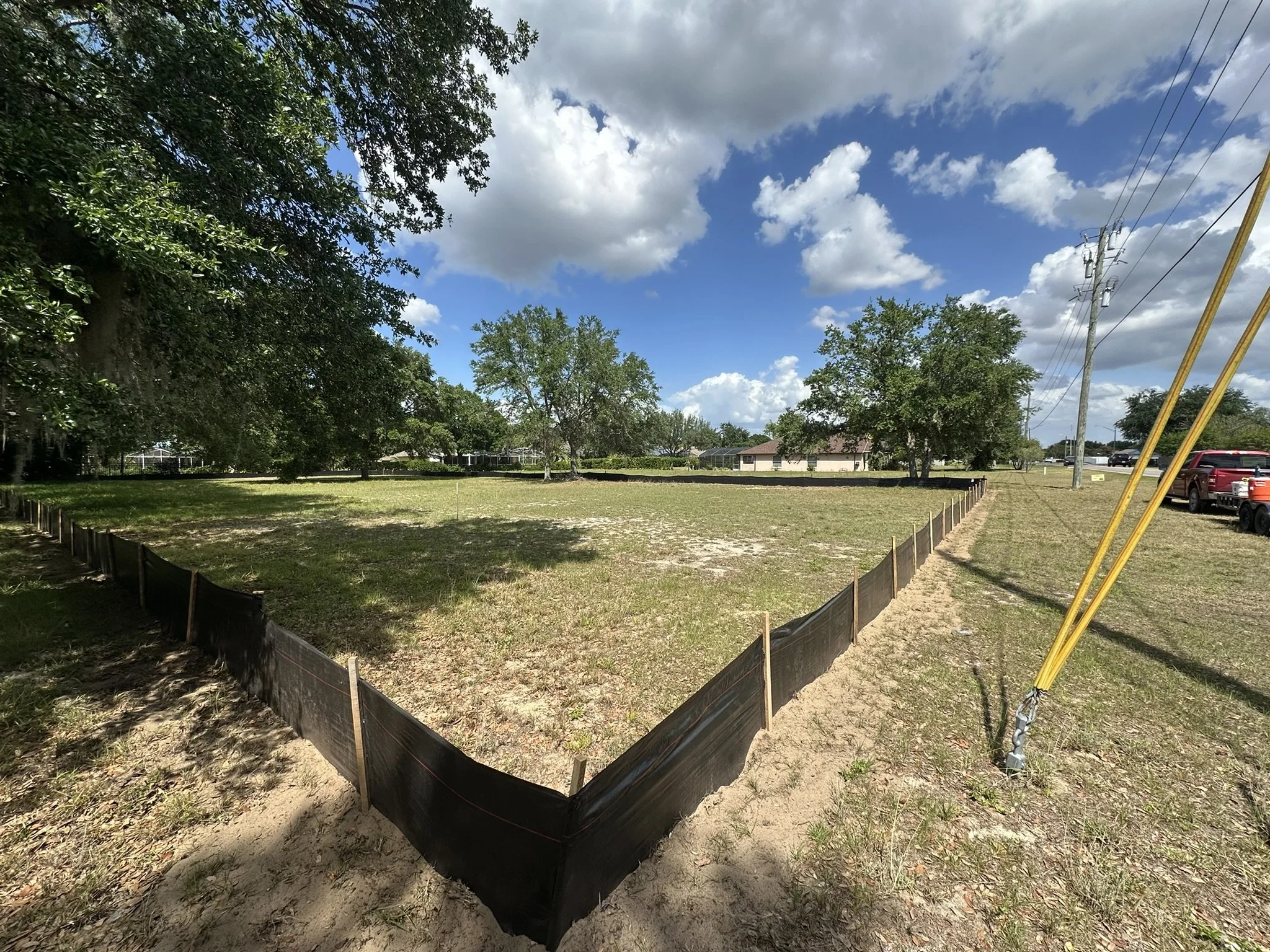
Field installation of exclusionary and silt fencing for gopher tortoise projects, wetland protection, construction limits, and environmental compliance.
Exclusionary / Silt Fence Installation
Field Installation for Environmental Protection, Construction Limits, and Compliance Support
Exclusionary fencing and silt fencing can play an important role in protecting sensitive environmental resources during clearing, grading, construction, and site development. Depending on the project, fencing may be used to help mark work limits, reduce sediment movement, protect wetlands or conservation areas, guide construction access, or prevent protected wildlife from entering active work zones.
Bear Environmental Consulting provides exclusionary and silt fence installation services for property owners, builders, developers, contractors, engineers, and project teams throughout Florida. Our installation services are commonly used for gopher tortoise projects, wetland protection, construction-phase environmental compliance, permit conditions, and protected area boundaries.
When Exclusionary or Silt Fence May Be Needed
Exclusionary or silt fence installation may be recommended or required when:
construction is occurring near wetlands, surface waters, or conservation areas
gopher tortoise burrows are located near or within a project area
a project needs to prevent tortoises or other wildlife from entering an active construction zone
work limits, buffers, or restricted areas need to be clearly marked
permit conditions require erosion, sediment, or environmental protection measures
wetland boundaries or conservation areas need field protection during construction
a disturbed site or relocation project requires protective measures
contractors need clear physical boundaries around sensitive resources
environmental monitoring or permit compliance inspections require fencing to remain in place
The appropriate fence type, placement, and installation method depend on the purpose of the fencing and the site conditions.
Exclusionary Fencing for Gopher Tortoise Projects
Exclusionary fencing may be used during gopher tortoise permitting, relocation, or construction planning to help prevent tortoises from entering an active work area after relocation or to help protect areas where tortoises should not be disturbed.
For gopher tortoise projects, fencing may be used to:
separate active construction areas from tortoise habitat
help prevent relocated tortoises from re-entering impact areas
protect burrows located outside the work area
support permit conditions or relocation planning
guide construction access away from sensitive locations
reduce the risk of wildlife entering active work zones
Gopher tortoise fencing must be planned carefully because improper placement or installation can create problems for both wildlife and the project team. Fencing should be coordinated with the survey results, permit conditions, relocation plan, construction layout, and environmental consultant recommendations.
Wetland and Conservation Area Protection
Silt fencing and other field barriers are commonly used to help protect wetlands, surface waters, buffers, conservation easements, preserve areas, and other environmentally sensitive areas during construction.
Fencing may help:
identify the limit of work near wetlands or buffers
reduce sediment movement toward wetlands or surface waters
discourage equipment or materials from entering restricted areas
provide a visible boundary for contractors
support permit compliance and environmental monitoring
help protect vegetation or habitat areas that must remain undisturbed
When installed near wetlands or conservation areas, fencing should be placed based on the approved project plans, delineated wetland boundaries, permit conditions, or environmental recommendations.
Construction Limits and Environmental Compliance
Clear field boundaries are often one of the simplest ways to avoid confusion during construction. Exclusionary or silt fencing can help contractors see where work should occur and where access should be avoided.
Construction-limit fencing may be useful for:
approved limits of clearing
wetland or buffer protection
protected species avoidance areas
conservation area boundaries
tree or habitat protection zones
restricted equipment access areas
staging or stockpile limits
permit-required protection areas
When combined with environmental monitoring, field fencing can help document that sensitive areas were marked and that project teams had clear visual guidance during active work.
Installation Methods and Site Considerations
The appropriate installation method depends on site conditions, soil type, vegetation, project purpose, and applicable permit or agency requirements. Some fencing may be installed as standard sediment-control fencing, while wildlife-related exclusionary fencing may require more specific placement, staking, trenching, or maintenance considerations.
Installation considerations may include:
fence purpose and required location
soil conditions and ability to secure posts
vegetation or debris along the proposed fence route
proximity to wetlands, burrows, or sensitive resources
access for equipment and crews
need for trenching or entrenchment
expected construction duration
maintenance and inspection needs
project phasing or relocation schedule
permit or plan requirements
Before installation, the project team should confirm the intended fence route and purpose so the fencing supports the project rather than creating confusion.
Inspection and Maintenance
Fencing is only useful if it remains properly installed and functional. Over time, silt fencing or exclusionary fencing can be damaged by weather, equipment, animals, vegetation, erosion, or routine construction activity.
Inspection and maintenance may include:
checking for fallen or damaged sections
repairing tears, gaps, or loose fabric
re-securing posts
removing accumulated sediment where appropriate
confirming that fence ends remain secure
checking that wildlife cannot pass through or under exclusionary sections
verifying that restricted areas remain clearly marked
documenting fence condition during environmental monitoring
Bear Environmental Consulting can provide installation, inspection, repair recommendations, or monitoring support depending on the project needs.
Common Projects That Need Exclusionary or Silt Fence
Exclusionary and silt fence installation may be requested for:
gopher tortoise relocation projects
disturbed site support
residential lot clearing
commercial development
subdivision construction
wetland impact or avoidance projects
construction near wetlands or surface waters
projects with conservation areas or preserve boundaries
roadway, driveway, or access construction
utility installation
environmental permit compliance
construction-phase environmental monitoring
protected species avoidance areas
What You May Receive
Depending on the project scope, deliverables may include:
exclusionary fence installation
silt fence installation
fence route planning support
coordination with survey, permit, or construction plans
field marking of fence routes, where appropriate
photo documentation of installed fencing
fence inspection notes
repair or maintenance recommendations
coordination with environmental monitoring
documentation for project files or permit compliance
The specific deliverables depend on the project purpose, site conditions, permit requirements, and requested scope.
Important Limitations
Exclusionary or silt fence installation does not authorize impacts to wetlands, surface waters, protected species, nests, burrows, conservation areas, or other regulated resources. If permitting, relocation, mitigation, or agency coordination is required, those steps must be completed separately before regulated work proceeds.
Fencing must be installed in the correct location and maintained throughout the necessary project phase to remain effective. Incorrect placement, poor maintenance, storm damage, equipment damage, or gaps in fencing can reduce its effectiveness and may create compliance concerns.
The appropriate fence type and installation method depend on project conditions, permit requirements, environmental resources, construction plans, and agency guidance.
Related Services
Depending on the project, Bear Environmental Consulting may also assist with:
Need Exclusionary or Silt Fence Installed for Your Project?
Contact Bear Environmental Consulting to discuss your property, project limits, environmental concerns, and fencing needs. We can help determine whether exclusionary fencing, silt fencing, monitoring, or related environmental support may be appropriate.