
Gopher Tortoise Surveys
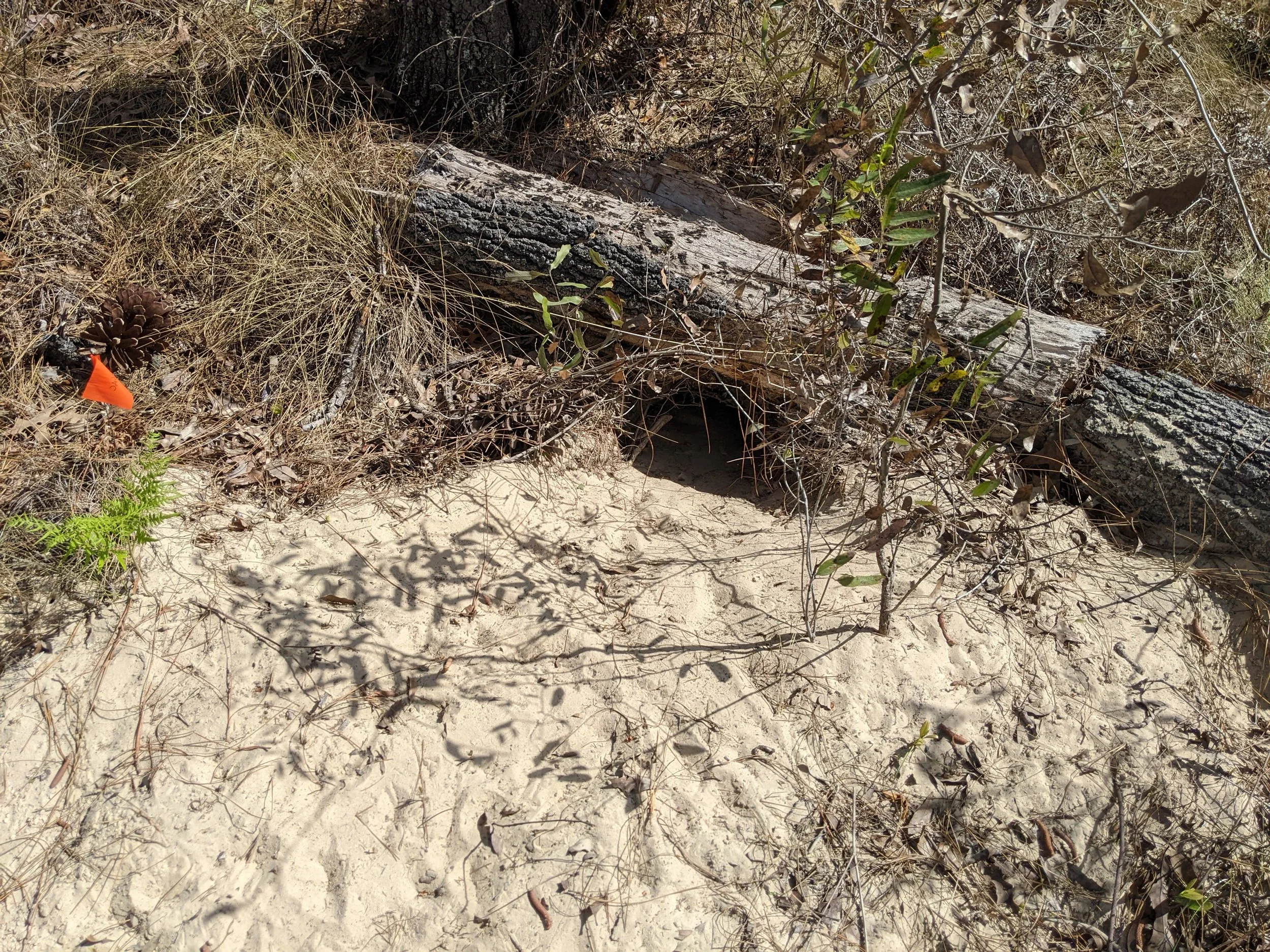
Professional gopher tortoise burrow surveys for Florida properties before clearing, construction, permitting, or development.
Professional Gopher Tortoise Surveys for Florida Properties
Before clearing, grading, building, or developing land in Florida, it is important to determine whether gopher tortoise burrows are present within the proposed work area. Gopher tortoises are a protected species, and their burrows can affect construction timing, permitting, site access, and project planning.
Bear Environmental Consulting provides professional gopher tortoise surveys for residential, commercial, agricultural, and land development projects throughout Florida. Our surveys help property owners, builders, developers, contractors, and project teams understand whether gopher tortoise burrows are present and what steps may be needed before work can continue.
When a Gopher Tortoise Survey May Be Needed
A gopher tortoise survey may be required before:
Clearing vegetation
Grading or site preparation
Building a home or structure
Expanding a driveway or access road
Installing utilities
Developing vacant land
Submitting or responding to permit requirements
Purchasing property with suitable habitat
Beginning construction in sandy upland habitat
Addressing county, municipal, or agency review comments
A survey is especially important when a property contains open sandy areas, upland habitat, pine flatwoods, scrub, pasture, old fields, or other areas that may support gopher tortoises.
What a Gopher Tortoise Survey Includes
The exact scope depends on the property size, habitat conditions, and project needs. A typical gopher tortoise survey may include:
Review of project boundaries and proposed work areas
Evaluation of suitable gopher tortoise habitat
Pedestrian survey of accessible areas
Identification of “potentially occupied” gopher tortoise burrows
Burrow status classification, when applicable
GPS mapping of observed burrows
Representative site photographs
Summary of survey findings
Written report or survey memo
Recommendations for next steps
If burrows are observed, the survey results can help determine whether permitting, relocation, avoidance, or additional coordination may be needed.
Survey Results and Next Steps
After the survey is complete, Bear Environmental Consulting provides a clear summary of the findings and recommended next steps.
Possible survey outcomes may include:
No Burrows Observed
If no gopher tortoise burrows are observed within the survey area, the report can document the survey effort and observed site conditions. Depending on project requirements, the client may be able to proceed without gopher tortoise relocation, although other environmental constraints may still apply.
Burrows Observed Beyond 25-Feet From the Work Area
If burrows are observed near (within 25-feet), but outside, the proposed work area, avoidance measures, construction awareness, monitoring, or protective fencing may be recommended depending on the location and project activities.
Burrows Observed Within 25-Feet of the Work Area
If burrows are observed within areas proposed for clearing, grading, construction, access, or staging, additional steps may be required before work can proceed. This may include gopher tortoise permitting and relocation through the Florida Fish and Wildlife Conservation Commission.
Why Gopher Tortoise Surveys Matter
Gopher tortoise concerns are often discovered late in the planning process, sometimes after building permits are issued, contractors are scheduled, or clearing is about to begin. When burrows are found late, project delays and unexpected costs can occur.
A gopher tortoise survey can help answer important questions such as:
Are gopher tortoise burrows present on the property?
Is suitable gopher tortoise habitat present?
Are burrows located within proposed impact areas?
Could clearing or construction affect tortoises or their burrows?
Is FWC permitting or relocation likely to be needed?
Should silt fencing, monitoring, or avoidance measures be considered?
What should the project team do before work begins?
Identifying these issues early allows property owners and project teams to make informed decisions and plan accordingly.
What Happens If I Start Work Without a Gopher Tortoise Survey?
Starting land clearing, grading, or construction before completing a gopher tortoise survey can create serious project complications if gopher tortoise burrows are later found on or near the disturbed area.
In Florida, gopher tortoises and their burrows are protected by state law, and FWC states that a relocation permit must be obtained before disturbing burrows or conducting construction activities. FWC also considers work within 25 feet of a gopher tortoise burrow to be a disturbance.
If vegetation or ground disturbance occurs before gopher tortoise surveys are completed, or before required capture and relocation activities are finished, the project may be considered a disturbed site. In those situations, FWC indicates that a disturbed site permit may be required.
A disturbed site situation can result in:
Additional survey requirements
Project delays
A required waiting period before surveys can be completed
Significantly higher mitigation costs
Required involvement of an Authorized Gopher Tortoise Agent
Possible FWC law enforcement review before permit issuance
Potential denial or revocation of a pending or active relocation permit
FWC states that once site disturbance within the project area stops, a minimum 28-day waiting period without further disturbance is required before tortoise burrow surveys are conducted within disturbed areas, and that the waiting period may be longer depending on temperature and season.
FWC also explains that mitigation contributions for disturbed site permits are higher than for other relocation permits because they account for tortoises that may have been buried underground or left the project site in response to disturbance activities and cannot be relocated. For example, the current Disturbed Site Mitigation Fees range from $2,051-$5,468 per tortoise disturbed, depending on the nature of the project.
Why This Matters for Property Owners and Contractors
A standard gopher tortoise survey is usually much easier to manage before clearing or construction begins. Once disturbance has occurred, the process can become more complicated, more expensive, and more time-sensitive.
Completing a survey before work begins can help determine whether:
Gopher tortoise burrows are present
Burrows can be avoided
An FWC permit is required
Relocation may be needed
Protective fencing or monitoring should be considered
The project can avoid becoming a disturbed site situation
If Work Has Already Started
If clearing, grading, mowing, grubbing, excavation, or other ground disturbance has already occurred and gopher tortoise concerns are discovered, stop work in the affected area and seek professional guidance before continuing.
Bear Environmental Consulting can help evaluate the site, document current conditions, identify potential next steps, and assist with coordination related to gopher tortoise survey, permitting, relocation, or disturbed site requirements.
Common Type of Projects That Need Gopher Tortoise Surveys
Gopher tortoise surveys are commonly requested for:
Residential lot clearing
Single-family home construction
Commercial development
Subdivision development
Roadway, driveway, or access improvements
Utility installation
Agricultural site work
Solar or infrastructure projects
Property purchases and due diligence
Code enforcement or county review
Projects where burrows are discovered during construction
If you are unsure whether your property needs a survey, Bear Environmental Consulting can review the project location, habitat conditions, and planned work to help determine the appropriate next step.
Gopher Tortoise Habitat in Florida
Gopher tortoises are commonly associated with dry, sandy upland habitats where they can dig burrows. In Florida, suitable habitat may include areas such as pine flatwoods, sandhill, scrub, dry prairie, pastures, old fields, disturbed uplands, roadsides, and open lots with well-drained soils.
Even properties that appear partially developed or disturbed may contain suitable gopher tortoise habitat. Burrows may occur along edges, open sandy areas, roadsides, fence lines, utility corridors, and other locations where conditions are favorable.
Because burrows are not always obvious to an untrained observer, a professional survey can help identify potential concerns before work begins.
What You Receive
Depending on the project scope, deliverables may include:
Gopher tortoise survey report
Burrow location map
Burrow status summary
Representative site photographs
GIS map exhibits
Summary of suitable habitat observations
Discussion of potential permitting needs
Recommended next steps
Reports can be prepared for property owners, builders, developers, contractors, engineers, agencies, or project teams as needed.
Important Limitations
A gopher tortoise survey documents observed conditions at the time of the survey. Wildlife activity and site conditions can change over time, and new burrows may be created after the survey is completed. Because of this FWC considers gopher tortoise surveys to be valid for a period of 90 days. Surveys may need to be repeated one or more times depending on the nature and timing of project impacts. A valid gopher tortoise survey is required at three critical points of any project: When applying for a relocation permit, at all times during gopher tortoise relocation, and at the start of clearing/construction.
A survey does not authorize impacts to gopher tortoises or their burrows. If burrows are located within proposed impact areas, appropriate authorization, permitting, relocation, avoidance, or other measures may be required before work can proceed.
For projects moving toward clearing or construction, it is important to complete the appropriate surveys and permitting steps before disturbing potential gopher tortoise habitat.
Related Services
Depending on the survey results and project needs, Bear Environmental Consulting may also assist with:
Need a Gopher Tortoise Survey?
Contact Bear Environmental Consulting before clearing, building, or developing your property. Provide the property address, parcel ID, county, and a brief description of the proposed work, and we can help determine the appropriate survey scope.