
Types of Gopher Tortoise Relocation Permits
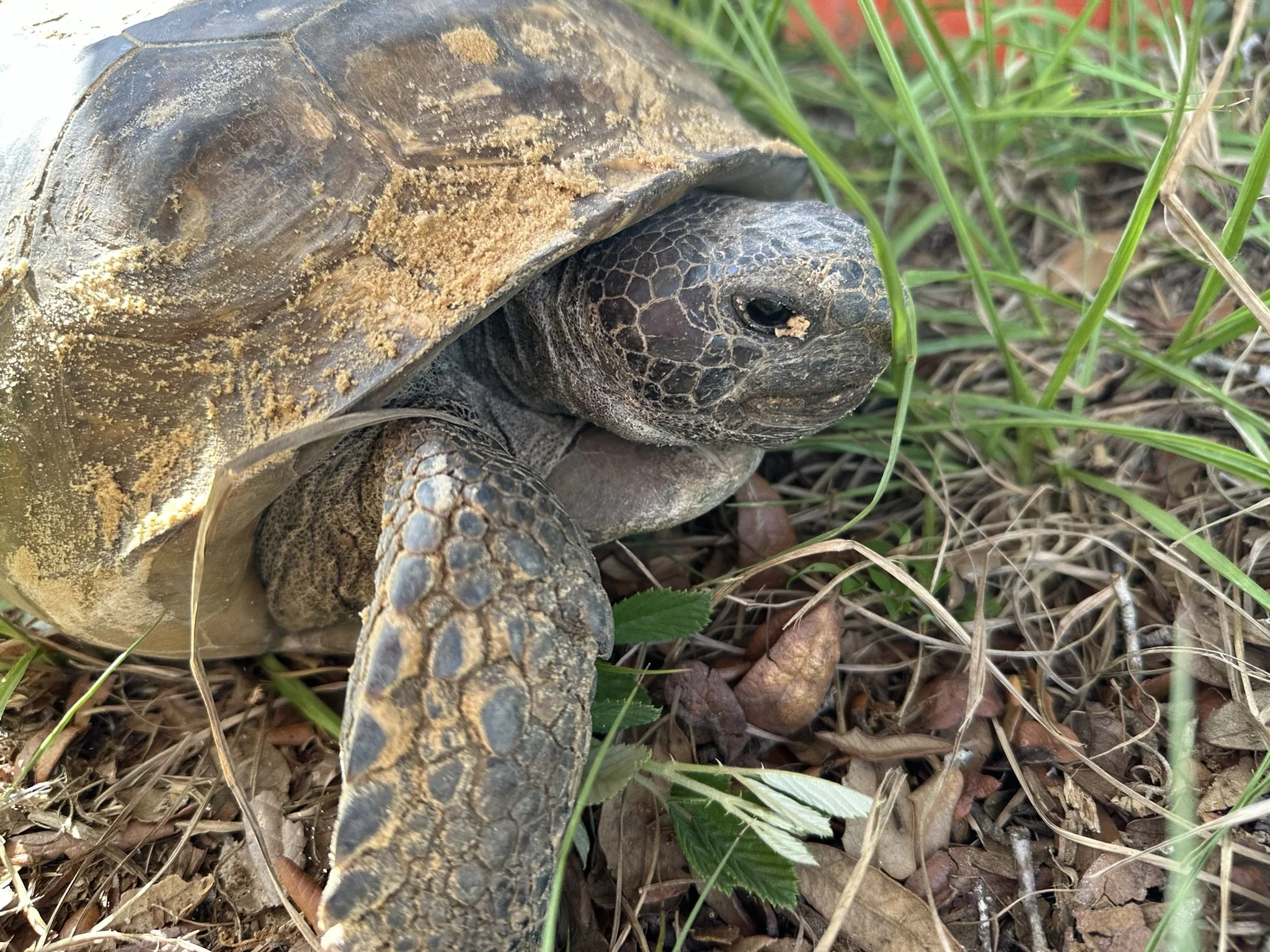
Understanding FWC permit options for projects where gopher tortoise burrows may be affected by clearing, construction, or development.
Understanding FWC Gopher Tortoise Permit Options in Florida
Gopher tortoises and their burrows are protected in Florida, and a relocation permit must be obtained from the Florida Fish and Wildlife Conservation Commission before disturbing burrows or conducting construction activities. FWC considers any work within 25 feet of a gopher tortoise burrow to be a disturbance.
Because every project is different, the appropriate permit type depends on the number of burrows, proposed impacts, project type, site conditions, available habitat, and whether tortoises will be relocated on-site or off-site. Bear Environmental Consulting helps property owners, builders, developers, contractors, and project teams understand which permitting path may apply and what steps may be needed before work can proceed.
Most gopher tortoise relocation permits require the assistance of an Authorized Gopher Tortoise Agent - Someone who holds a permit from the Florida Fish and Wildlife Conservation Commission (FWC) to apply for and act upon the various types of relocation permits.
Do I Need a Gopher Tortoise Relocation Permit?
A relocation permit may be needed when potentially occupied gopher tortoise burrows cannot be avoided during clearing, grading, excavation, building construction, equipment staging, road or driveway construction, utility installation, or other development activities.
FWC states that even when burrows are present, a permit may not be required if all development activity avoids tortoises and burrows by at least 25 feet. However, this should be evaluated carefully based on the project limits, equipment access, staging areas, construction methods, and the ability to maintain protective buffers throughout the project.
Quick Permit Comparison
Permit Type
Common Use
10 or Fewer Burrows
Small project with 10 or fewer burrows
Conservation
Large project with 10 or more burrows
Temporary Exclusion
Major linear transmission projects
Disturbed Site
Projects where disturbance occurred before surveys or relocation were completed
Recipient Site
Properties approved to receive relocated tortoises
Permit Type Details
-
The 10 or Fewer Burrows Relocation Permit is commonly used for smaller projects, often including single residential construction, where relocation is needed for five or fewer tortoises or 10 or fewer burrows. FWC explains that this permit may allow tortoises to be relocated either on the property, if suitable habitat will remain, or off-site to a permitted recipient site if suitable habitat will not remain.
This permit type is often relevant for:
Single-family residential construction
Individual lot clearing
Small commercial projects
Driveway, access, or utility improvements
Small project areas where burrows cannot be avoided
-
On-site relocation may be possible when suitable gopher tortoise habitat will remain on the property during and after development. FWC states that the on-site recipient area must include at least 750 square feet of suitable gopher tortoise habitat that is at least 10 feet wide, and that half of the recipient area must be at least 25 feet from construction boundaries.
On-site relocation can sometimes be more economical when the site layout and habitat conditions support it. However, it must still meet applicable permit requirements, and temporary exclusion fencing may be needed to keep relocated tortoises out of the active work area.
-
Off-site relocation may be needed when suitable habitat will not remain on the property or when tortoises cannot be safely relocated within the site. FWC notes that off-site relocations require an Authorized Gopher Tortoise Agent and an off-site recipient site, both of which may involve additional costs.
-
The Conservation Permit is generally used for development projects that require relocation when more than 10 gopher tortoise burrows occur on the development site, or when another relocation permit has previously been issued for the same property. On-site or off-site relocation can be used for this permit type, however most Conservation permits utilize off-site relocation due to the more rigid habitat, soils, and tortoise density requirements required under a conservation permit. On-site relocation under a Conservation permit also requires payment of Mitigation fees that are significantly higher than those required when utilizing off-site relocation.
This permit type is often relevant for:
Larger residential developments
Commercial or industrial projects
Subdivision development
Infrastructure projects
Larger land clearing or site development projects
Projects with more than 10 burrows within the development site
Because Conservation Permits are typically associated with larger projects, they often require more detailed planning, mapping, recipient site coordination, mitigation contribution planning, and construction scheduling.
-
A Disturbed Site Permit may be required when ground disturbance occurs before gopher tortoise burrow surveys are complete or before required capture and relocation activities have been completed. FWC states that this permit allows for mitigation and relocation of gopher tortoises from disturbed portions of project sites. FWC also notes that disturbed site permits are not punitive, but they will not be issued until associated FWC law enforcement investigations have been completed.
Disturbed site concerns can arise when work begins before the gopher tortoise process is complete, including:
Clearing
Grading
Mowing or heavy vegetation removal
Grubbing
Excavation
Fill placement
Heavy equipment operation
Construction access or staging
A disturbed site situation can lead to additional costs, delays, waiting periods, mitigation requirements, and coordination needs. If work has already started and gopher tortoise concerns are discovered, it is important to stop work in the affected area and seek professional guidance before continuing.
-
The Temporary Exclusion Permit is a specialized permit type available specifically for the installation of major linear utility transmission lines. FWC explains that this permit applies when tortoises must be temporarily excluded from a utility construction corridor and habitat within the corridor will be restored to provide suitable habitat after utility installation is complete.
This permit type is generally associated with:
Major linear utility transmission projects
Utility construction corridors
Temporary exclusion from work areas
Projects where habitat restoration is planned after construction
This is not typically the permit used for standard residential or commercial construction projects, but it may be important for qualifying utility or infrastructure work.
-
A Recipient Site Permit is different from a typical development-related relocation permit. It applies to properties that are approved by FWC to receive relocated gopher tortoises.
FWC describes recipient sites as privately or publicly owned lands of 25 acres or more that are permitted to accept gopher tortoises needing relocation away from development impacts.
For most property owners, builders, and developers, the main issue is not obtaining a recipient site permit. Instead, the issue is coordinating off-site relocation to an existing FWC-permitted recipient site when tortoises cannot remain on the project property.
Recipient site availability, location, acceptance fees, and scheduling can affect the overall relocation process, so this is an important consideration for projects requiring off-site relocation.
-
FWC’s gopher tortoise permitting framework also includes other categories and related authorizations, such as Authorized Gopher Tortoise Agent permits and Scientific Collecting permits. Those are generally not the permit types most property owners need for development projects, but they may be relevant to consultants, researchers, or specific project circumstances.
FWC also notes that incidental take permits are no longer issued. Existing incidental take permit situations should be discussed directly with FWC.
How to Know Which Permit Type Applies
The correct permit type depends on several project-specific factors, including:
Number of gopher tortoise burrows
Whether the burrows are potentially occupied or abandoned
Whether the burrows can be avoided by at least 25 feet
Size and location of the development area
Whether suitable on-site habitat will remain
Whether relocation must occur off-site
Whether disturbance has already occurred
Whether the project is a qualifying utility corridor
Recipient site availability
Project timeline and construction schedule
In many cases, the permitting path cannot be determined accurately until a gopher tortoise survey has been completed and the proposed impact limits are understood.
Typical Process
The process often includes:
Initial review of the project area
The property, proposed work limits, and available environmental information are reviewed.Gopher tortoise survey
A survey is completed to identify burrows, classify burrow status, and map burrow locations.Avoidance evaluation
The project team evaluates whether burrows can be avoided by at least 25 feet.Permit type determination
The appropriate permit type is identified based on survey results, project design, and proposed impacts.Permit application and supporting exhibits
Required application materials, maps, and documentation are prepared.Relocation planning
On-site or off-site relocation logistics are coordinated, depending on the permit type and site conditions.Capture & Relocation
Tortoises are captured and relocated according to the issued permit.Construction readiness and compliance support
Protective fencing, monitoring, or construction-phase guidance may be recommended to keep the project compliant.
Why Early Planning Matters
Gopher tortoise permitting can affect project cost, timeline, construction sequencing, and site design. Waiting until construction is about to begin can reduce available options and may create avoidable delays.
Early review can help determine:
Whether burrows are present
Whether burrows can be avoided
Whether relocation is likely required
Which permit type may apply
Whether on-site relocation is feasible
Whether off-site recipient site coordination is needed
Whether mitigation contributions and additional relocation costs should be expected
Whether temporary fencing or monitoring should be included in the construction plan
How Bear Environmental Consulting Can Help
Bear Environmental Consulting assists with gopher tortoise survey, permitting, relocation planning, and related compliance support for Florida projects. We help clients understand the applicable permitting path, prepare required documentation, coordinate with project teams, and identify practical next steps before clearing or construction begins.
Depending on your project, we may assist with:
Gopher tortoise surveys
Burrow mapping and documentation
Permit type evaluation
FWC permit application support
On-site relocation planning
Off-site recipient site coordination
Mitigation contribution guidance
Disturbed site support
Exclusionary or silt fence planning
Construction-phase monitoring and compliance guidance
Not Sure Which Gopher Tortoise Permit You Need?
Contact Bear Environmental Consulting to discuss your property, proposed work area, survey results, and construction timeline. We can help determine whether a 10 or Fewer Burrows Permit, Conservation Permit, Temporary Exclusion Permit, Disturbed Site Permit, or another permitting path may apply.