
Burrowing Owl Permitting & Mitigation
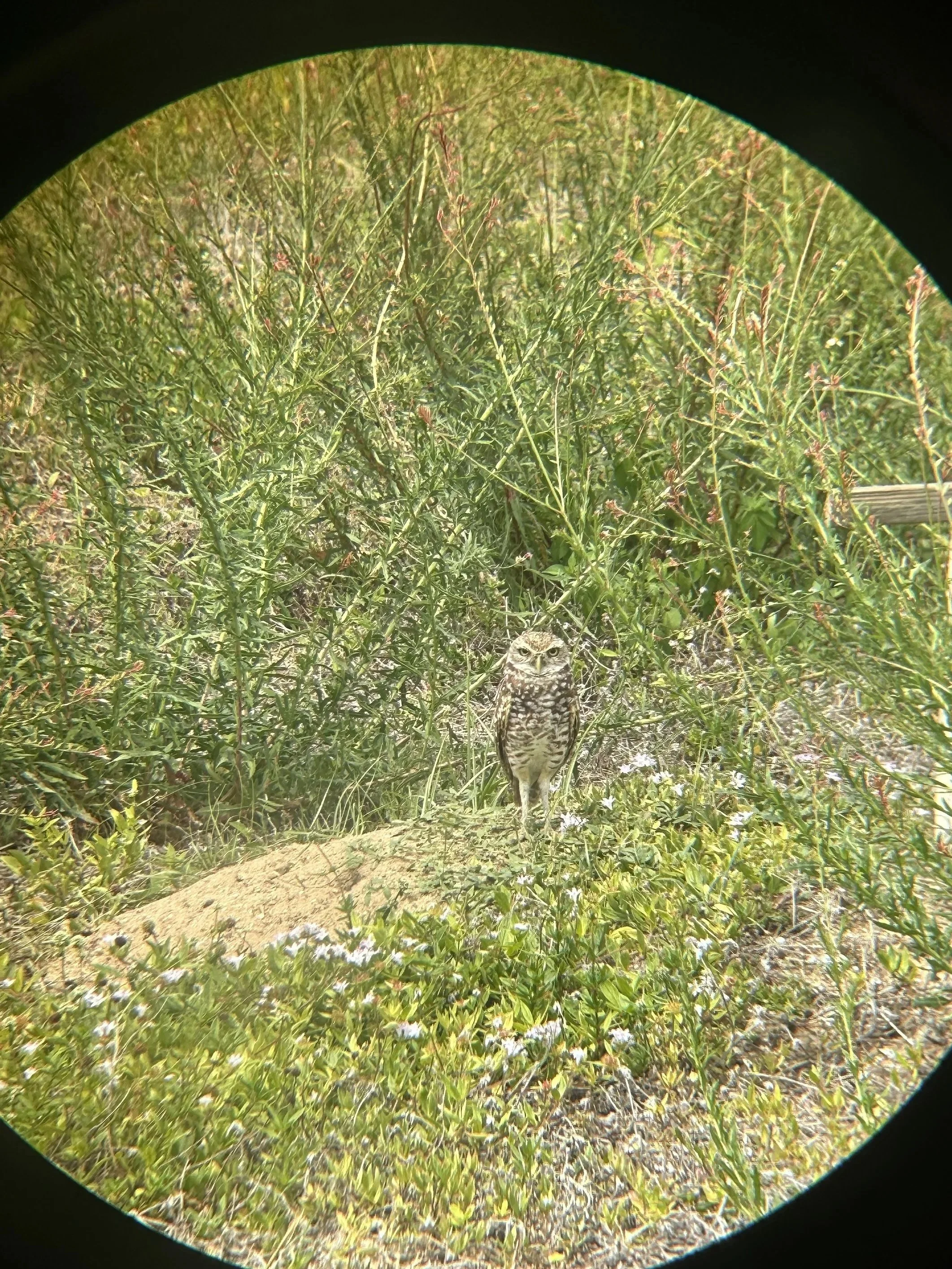
FWC permitting, mitigation, protected-distance review, and construction planning support for Florida projects involving burrowing owls or burrows.
Permitting and Mitigation Support for Projects Involving Burrowing Owls
If burrowing owls or potentially occupied burrows are located within or near a proposed work area, additional review, avoidance, permitting, mitigation, or monitoring may be needed before clearing, grading, construction, or site development proceeds.
The Florida burrowing owl is listed as a State Threatened species. FWC’s Species Conservation Measures and Permitting Guidelines for the Florida Burrowing Owl state that burrowing owls, active nests, eggs, and young are also protected under the federal Migratory Bird Treaty Act, along with applicable Florida rules. The same guidance explains that take may include harm or harassment, including significant habitat modification or degradation when it actually kills or injures wildlife by significantly impairing essential behavioral patterns such as breeding, feeding, or sheltering.
Bear Environmental Consulting provides burrowing owl permitting and mitigation assistance for property owners, developers, builders, contractors, engineers, planners, and project teams throughout Florida. Our goal is to help identify the appropriate path forward, reduce avoidable delays, and support compliance with applicable burrowing owl requirements.
When Burrowing Owl Permitting May Be Needed
Burrowing owl permitting or mitigation may be needed when proposed work could affect burrowing owls, active nests, eggs, young, potentially occupied burrows, or important habitat associated with burrowing owl use.
Permitting review may be appropriate if:
Burrowing owls or burrows are located within or near proposed clearing, grading, excavation, or construction areas
Work will occur within protected distances of a potentially occupied burrow
Burrows may need to be scoped, excavated, filled, blocked, or removed
Construction activities could disturb owls during the breeding season
The project may remove or modify suitable foraging habitat around burrows
A county, municipality, agency, builder, or contractor has requested burrowing owl documentation
Burrows were discovered after project design, permitting, or construction planning began
Work has already started and burrowing owl concerns were identified
If burrowing owl concerns are present, the appropriate next step depends on burrow status, project timing, site design, habitat conditions, and whether take can be avoided.
Protected Distances Around Burrowing Owl Burrows
FWC’s burrowing owl guidance identifies two important distance thresholds around potentially occupied burrow entrances: 10 feet and 33 feet.
Disturbances within 10 feet of a potentially occupied burrow entrance at any time of year are expected to cause take, unless the activity is specifically identified as not expected to cause take. During the breeding season, disturbances within 33 feet of a potentially occupied burrow entrance are expected to cause take unless otherwise excepted. The breeding season is identified as February 15 through July 10.
In practical terms:
10 feet is the year-round distance where disturbance near a potentially occupied burrow is generally expected to create a take concern.
33 feet is the breeding-season distance where disturbance near a potentially occupied burrow is generally expected to create a take concern.
Larger buffers, monitoring, avoidance measures, or permitting may still be recommended depending on project activity, burrow status, construction methods, and site conditions.
FWC’s guidance also notes that burrowing owl burrows are typically 5 to 10 feet long, and that most activities within 10 feet of a burrow can result in burrow collapse. The guidance further states that nests within 33 feet of construction activity had significantly lower productivity
Burrowing Owl Seasonality
Burrowing owls may use burrows year-round, but the breeding season is especially important for project planning. FWC’s guidance defines the Florida burrowing owl breeding season as February 15 through July 10, while also noting that owls can breed earlier or later.
During the breeding season, burrows may contain eggs or flightless young. FWC’s guidance classifies a potentially occupied burrow containing eggs or used by flightless young as an active burrow. The guidance also states that FWC typically does not issue permits for take of active nests except in situations involving health and human safety, and that removing an active nest may require a federal permit from the U.S. Fish and Wildlife Service.
Because project timing can affect available options, it is best to evaluate burrowing owl concerns before clearing, grading, or construction is scheduled, especially if work may occur during or near the breeding season.
Significant Habitat Modification
Burrowing owl permitting is not limited to the physical burrow entrance. Habitat around burrows can also be important because burrowing owls rely on nearby open, low-vegetation areas for feeding and other essential behaviors.
FWC’s guidance defines significant habitat modification as an activity that results in the loss of more than 50% of the total suitable foraging habitat within a 1,970-foot radius circle around a burrow centroid. The guidance states that activities that may cause significant habitat modification include clearing, grading, paving, bulldozing, digging, building construction, and site preparation for development.
The same guidance explains that burrowing owls require sufficient foraging habitat around their burrows and that reducing available habitat can impair the essential behavior of foraging. It also describes suitable foraging habitat as open areas primarily dominated by low herbaceous vegetation, including certain rural, agricultural, wetland-edge, and urban open-space land cover types.
For development projects, this means a burrowing owl review may need to consider:
the burrow location;
the burrow cluster or burrow centroid;
the proposed work area;
the amount of suitable foraging habitat that may be removed or altered;
whether the project would exceed the significant habitat modification threshold;
whether avoidance, minimization, mitigation, or habitat management measures may be needed.
This is especially important for larger residential, commercial, industrial, agricultural conversion, solar, or infrastructure projects that may affect open habitat around known burrowing owl burrows.
Incidental Take Permits
FWC’s guidance states that activities resulting in take of Florida burrowing owls are prohibited without an incidental take permit or other authorization, unless an exception applies. The guidance explains that incidental take permit applications are available through FWC’s online permitting site, currently under the name “migratory bird nest removal,” and that the applicant must be the landowner or an agent designated in writing by the landowner.
Burrowing owl incidental take permits may involve a combination of:
Avoidance when practicable;
Minimization of unavoidable take;
Mitigation for permitted take;
Burrow scoping;
Hand excavation of inactive burrows;
Protection of active nests;
Habitat or project design considerations;
Agency coordination;
Permit conditions and documentation.
FWC’s guidance notes that incidental take permits often involve destruction of potentially occupied burrows to conduct otherwise lawful activities. It further explains that permittees or designated agents use a burrow video scope to evaluate whether a burrow is inactive, followed by careful hand excavation, and that proper scoping and excavation require skill and training.
Avoidance, Minimization, and Mitigation
Burrowing owl permitting generally starts with evaluating whether take can be avoided. If take cannot be fully avoided, the project may need to minimize impacts and provide mitigation consistent with the applicable permit conditions.
Avoidance
Avoidance may include adjusting project limits, maintaining protective buffers, relocating access routes, preserving burrows or habitat, or modifying construction timing so that burrows, owls, eggs, or young are not affected.
Minimization
FWC’s guidance identifies minimization options such as conducting project activities outside the breeding season, maintaining a 10-foot buffer around at least some potentially occupied burrows year-round when all burrows cannot be avoided, and maintaining a 33-foot buffer around at least some potentially occupied burrows during the breeding season.
Other minimization measures may include reducing the number of impacted burrows, modifying site design, managing construction activities, or using project-specific monitoring and protective measures.
Mitigation
Mitigation may be required when impacts cannot be avoided or fully minimized. Mitigation options depend on the project category, extent of impact, habitat conditions, and permit requirements. In some cases, mitigation may involve habitat management, artificial burrows, preserve areas, conservation measures, or other FWC-approved actions.
Bear Environmental Consulting can help evaluate likely mitigation considerations and coordinate appropriate next steps with the project team.
Bear Environmental Consulting can help project teams evaluate these options and coordinate appropriate next steps.
Project Categories and Habitat Impacts
FWC’s guidance describes project categories that consider whether burrows may be destroyed or owls harassed, whether suitable foraging habitat is impacted, and whether significant habitat modification occurs.
The guidance generally describes:
Category 1 Projects as activities that destroy burrows or harass breeding pairs but do not impact suitable foraging habitat.
Category 2 Projects as activities that impact suitable foraging habitat and destroy burrows or harass owls but do not result in significant habitat modification.
Category 3 Projects as activities that destroy burrows or harass burrowing owls and result in significant habitat modification.
Most residential and commercial developments are described in the guidance under Category 2 when they impact suitable foraging habitat and involve burrow destruction or harassment, but do not result in significant habitat modification.
Understanding the project category can help determine the permitting, minimization, and mitigation path.
What the Permitting & Mitigation Process May Include
The exact process depends on the site conditions, burrow status, project design, season, and FWC requirements. Burrowing owl permitting and mitigation assistance may include:
Review of burrowing owl survey results
Review of proposed work limits and construction plans
Evaluation of burrow locations and protected distances
Review of breeding-season timing concerns
Evaluation of suitable foraging habitat and potential significant habitat modification
Avoidance and minimization recommendations
Permit strategy and next-step guidance
Assistance with FWC incidental take permit materials
Coordination regarding landowner authorization
Support with mitigation planning
Coordination with project engineers, planners, contractors, or owners
Construction-phase monitoring recommendations
Documentation of site conditions and recommended next steps
What You May Receive
Depending on the project scope, deliverables may include:
Burrowing owl permitting strategy
Burrow location map or GIS exhibit
Protected-distance review
Seasonality and timing recommendations
Significant habitat modification screening
Suitable foraging habitat review
Permit application support materials
Mitigation or minimization recommendations
Agency coordination support
Construction compliance recommendations
Written summaries or technical documentation
Monitoring support, where applicable
The specific deliverables depend on survey results, site conditions, proposed impacts, and permitting needs.
Important Limitations
Burrowing owl permitting requirements are project-specific and depend on site conditions, burrow status, proposed activities, project timing, habitat impacts, and agency review. A preliminary review or survey does not guarantee permit approval, agency concurrence, or a specific mitigation outcome.
Permitting assistance does not authorize work until the appropriate permit or authorization has been issued and any required conditions have been met. If burrowing owls, eggs, young, active nests, or potentially occupied burrows may be affected, work should not proceed until the appropriate regulatory path has been confirmed.
Because burrowing owls may breed earlier or later than the typical breeding season and may establish new burrows over time, additional surveys or pre-activity checks may be needed before clearing, grading, or construction begins.
Related Services
Depending on your project, Bear Environmental Consulting may also assist with:
Need Help With Burrowing Owl Permitting or Mitigation?
Contact Bear Environmental Consulting to discuss your property, burrow locations, proposed work, project timing, and permitting needs. We can help determine whether avoidance, monitoring, permitting, mitigation, or additional survey work may be needed before your project moves forward.